

Paul's story
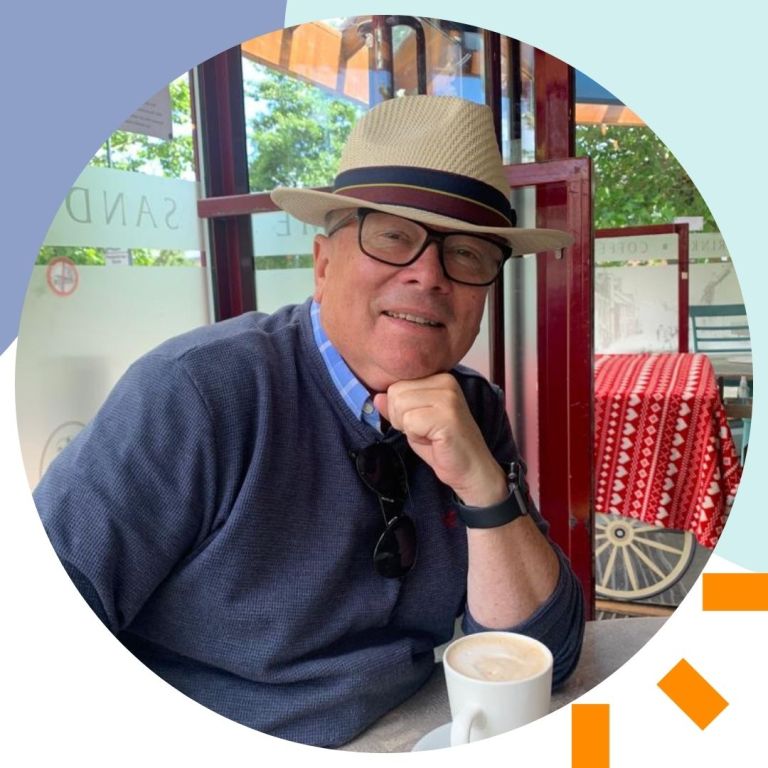
Paul was diagnosed with kidney cancer in 2019 aged 59. Following an operation and treatment he came to Penny Brohn UK for an introduction day finding the support he needed to cope with the mental impact of cancer on his mind, body, spirit and emotions. Paul used a few online sessions during lockdowns as well as returning to the Penny Brohn UK centre to enjoy the gardens. Recently, he participated in a cancer retreat.
Since his initial diagnosis Paul has also had multiple recurrences of cancer. At the time of this interview he is waiting for scan results.
Diagnosis
It started with terrible pain in my back. I’ve played sport all my life. I played rugby and football so I just didn’t take a lot of notice at first. Then one day, I was just really, really poorly. It started with a pain in the back and that just kept happening, really just these odd spasms. And, then Boxing Day, I was having a jolly good time with my family and went to the toilet and peed blood. And it was not just a little bit. It was scary. My brother said you better get checked out which I did. That’s when the roller-coaster started. Lots of tests. That’s one thing people with cancer notice. Suddenly, there are lots and lots of tests. Nothing is in your control.
The tests quickly established that I had a tumour on my kidney. In the midst of this I went to Australia to visit my daughter – it wasn’t the best of times. When I came back it was really stressful. I went back to see the oncologist and found out it was a big tumour. I can’t remember the size now but pretty big.
I’m a pretty tough character and I wanted to see the scan. But when I saw it, it was devastating. I couldn’t see my kidney at all as it was totally wrapped in the tumour. I thought I’d prepared myself. But no one can prepare themselves for a moment like this. You just have to do the best you can. That day changed me. I’m a Management Consultant, workaholic maybe, and at that time I was working pretty hard. I found I couldn’t work from that point on…
Medical treatment
I remember the morning I went in for the operation, there was quite a high risk with it because I was going to lose a lot of blood because they thought it was attached to something else. My family was allowed to come with me and they watched me do the walk not knowing if they’d see me again. That was so hard. My son in law still talks about it. I did come through but spent eight days in ICU. That had a really bad effect on me, mentally. In fact by day five, I was done. I was really in a dark place. I didn’t think I’d survive. That was very scary and very lonely.
It was a big invasive operation and I couldn’t walk anywhere for three months. I couldn’t lift up anything heavier than a kettle. I’ve got over some pretty serious sports injuries but this was so different. I didn’t understand how different this would be. I would say to anybody don’t ever think it’s going to be just like a sports injury. It’s completely different to that. And you really do have to do what you’re told. There’s no medals for heroes. You have to change how you think. It’s hard when you’re used to being active. I would happily talk to people about this to help them prepare. Small steps…
I could just shuffle a few steps, so I just did a little route from my front door to the end of the fence. And then in following weeks the lamp post. And unlike sports injuries where you push yourself, you just can’t or it sets you back. It’s best just to do enough. Four years later, I’ve learned to pace myself.
Penny Brohn UK
However, the mental impact is harder than the physical. Such a major drain on your partner and your family. I needed to find someone to talk to and was recommended Penny Brohn UK by a friend but also Macmillan in Bristol referred me to the charity.
I couldn’t believe the wonderful facilities and the garden – you can’t help but be moved by walking around the garden. I found it an oasis where I was able to be me. I was able to cry if I wanted to. I still come and walk or sit in the garden.
After three months, my wife and I came to a session at the centre and there was a wonderful lady doing some movement out on the lawn. She took a chair out for me to use because I was still weak. I’ll never forget what she said to me – it was a lightbulb moment. She told me to take my shoes and socks off – to stand up, feel the grass between my toes, feel the air on my skin and look at the sky above my head because that’s all we need. We don’t need anything else. And that was a beautiful moment for me. I’ve repeated that to lots of people and sometimes I still do it. Just go outside, nature’s everything.
I’ve met people through Penny Brohn UK at all stages of their illness. What I immediately noticed was a camaraderie. No pressure to be a certain way. We were all individuals. And everybody shared their stories. It was powerful. You didn’t feel alone.
I went to see a physio to help with my recovery. After six months or so she said to me you’ll never be the same again. I was absolutely devastated. But it’s one of the best things that was ever said to me. The harsh reality. Because I’m not the same. You have to find a new way – how to sleep, how you eat, sleep, drink, have sex, everything, everything is different. For me, I think I had both sides of it. On one hand embracing change was easy for me. And on another it was really hard. Because I’m a go getter, solution focused. I’m a driven person, I was impatient and grumpy which I’m sure made me intolerable to live with.
You want to embrace the new but you’re also mourning the old you. It’s a kind of grief. For what you’ve lost.

Reoccurrence #1
Two years later, the cancer came back in my adrenal gland.
I’d had my kidney removed and then they took out my adrenal gland. So that was another major operation because of the damage to the tummy. It wasn’t as dramatic but it was still difficult because it was in the same area and it’s tough. You’re almost back to square one with your recovery.
And, I found it worse than the first time even though it was a smaller operation. I think I found it even more difficult to manage. I needed all the tools I’d learned, relaxation, mindfulness, patience, small goals, talking to get out of my head.
And, it was Covid so I was locked in. That was almost unbearable. I actually thought I was going mad. I used some of the Penny Brohn UK sessions online but I got really frustrated and it was nobody’s fault. It was just me. I’m a team player and I missed that team thing. Being with others and chatting. It was like, man, I’m not going to meet anybody today. So I didn’t overuse it because I just wanted to get out.
Reocurrance #2
Then again, cancer came back. This time in my liver. And I just couldn’t believe it. So four weeks ago now I had a liver resection to remove 25%. I use humour a lot. I even joked on the operating table. Humour is an important way of coping for me, having fun. I think you’ve got to have fun in your life. So that has helped me along. Finding the joy in things.
I did look forward to a session with a wonderful Janey from Penny Brohn UK. She’s amazing. She really is. She’s a friend now. I’ve known her for years. She’s just got a way about her that’s so reassuring. She’s got healing hands, literally. And I don’t say that lightly. She heals your mind, body and soul. I was delighted to go on the cancer retreat recently with Janey and be with people again.
In May 2023 I was told the cancer was now in my right lung. That meant more treatment, this time radiotherapy. At the same time, I was experiencing severe back pain so we started tests to see if the cancer had moved to my spine. Thankfully, in July the MRI revealed the cancer hadn’t spread there.
What do you think Penny Brohn UK has given you? What do you think is the biggest thing it's helped you with?
It helped me find a coping mechanism. It opens up a coping mechanism where there’s loads of windows and you can choose any window you want to jump into. And there’s no pressure, absolutely never any pressure. You don’t have to do anything. You can have lunch or just go walk or sit in the garden. I’ve done that a few times. I was up there the other day. There’s something beautifully peaceful about it and I often have a few tears. And that’s ok.
It’s an absolute haven for me. It makes me feel spiritual. It’s so welcoming, you feel a belonging.
I’m always greeted by someone with a big smile and that makes you feel good. Because I always belonged to clubs so when that’s cut off you don’t have anything. I feel that Penny Brohn UK is like a big jolly club – I know I can’t believe I’m saying that given why we’re all there but I genuinely feel like that. And, there’s joy.
I’ve helped out a couple of times on sessions and it felt great. I want to do that more – give back as much as I can. That makes me feel good. I spoke to a corporate supporter too and I enjoyed that. I’m thinking of trying a bit of work next which is a bit scary. Just dipping my toe in the water to see what it feels like. No pressure.
Tell me about the effects on your family. How has it been for them? And has Penny Brohn UK helped any of them or what you've learned at Penny Brohn UK helped you to help them?
What I’ve learned has helped me help them. It’s very hard on your partner. I think that it’s very hard or impossible for them because what can they do? What’s right? And, what’s wrong?
Staying positive stuff is tough too. When you have a really positive day and you’ve done your best and you’re not feeling great at the end of the day. And someone says stay positive, really! That can be really hard to deal with. I think, do you not think I’m trying to stay positive? I get very prickly about little things.
Family
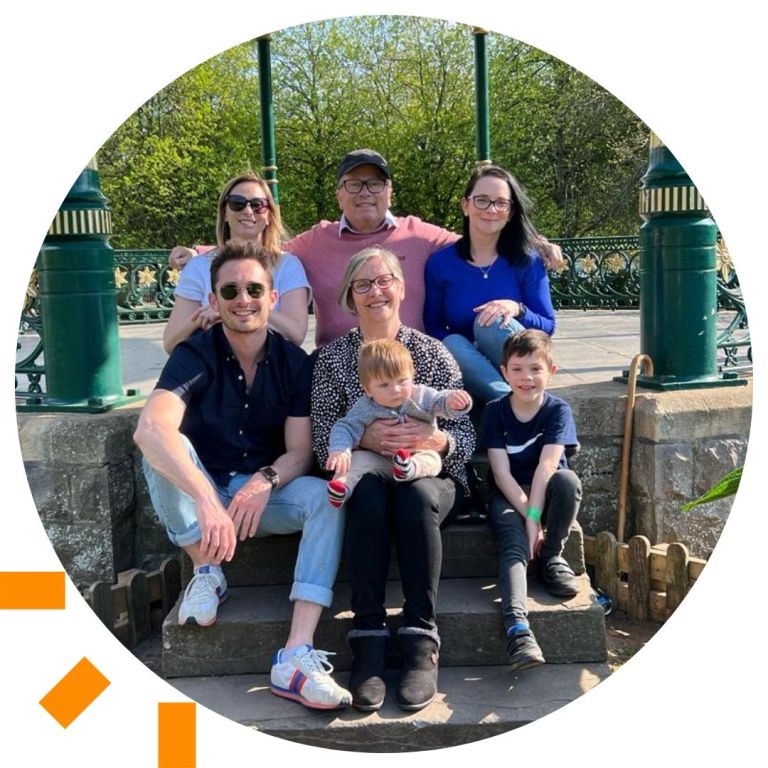
I’m blessed with a wonderful family. My wife, two daughters and a son, plus my grandchildren. Pure joy.
It’s so hard for my wife, she had to keep working. I wish she’d come to Penny Brohn UK more. When I had the operation on my adrenal gland she couldn’t be with me and she didn’t know when, or if she’d see me again. Thankfully, she had the children for support. But I know she finds it really hard.
Cancer is lonely, because no one can experience it in the same way you do. Or feel your feelings. You’re alone in your head. So even with a loving family it can be really tough.
What's special about Penny Brohn UK for you?
The understanding that they are there for me, at any time. That they are helping me through the most devastating time in my life. To stand by me and that just being is enough, you don’t have to do anything.
I can’t stress enough about having the wonderful comfort, care, and people that listen and don’t want anything back. Being close to a stranger at your most vulnerable and weakest was one of the craziest things I’ve ever done but I’m so glad that I had the courage to do it. I found it easy to trust the people I met and that’s changed me. That’s down to the people who make up Penny Brohn UK.
Hopes for the future
I’d love to see my grandson as a teenager and the older one reach 21. I want to see that too. I hope for my wife to be more relaxed, it’s so hard for her. We’ve been on this journey for so long and had so many ups and downs.
I have a great medical team. We’re in it together. They believe in me and I believe in them. We have faith in each other. We’ll keep going for as long as it takes. Our surgeons are magnificent.
Is there anything you’d like to say to someone else about why they should seek support from Penny Brohn UK?
Having people who care deeply about you as a person makes such a difference to how you think. You really do feel less alone and have more choices and control. So get in touch. Just do it, dive in…
We’d like to thank each of our clients for sharing their experience. The words used in each case study are preferred by the client featured. Penny Brohn UK encourages everyone to use their own words to tell their story. If you have any questions about any of the language used, please email comms@pennybrohn.org.uk.