


The business, which I co-ran with my identical twin brother Anthony, lasted 40 years until 2020 when Covid struck. The manager took over at that point and I decided to retire aged 67. I still keep in touch with everyone which is nice. Sadly, my brother Anthony died 11 years ago with pancreatic cancer, but I was fortunate to be with him when he died.
Eight years ago, I noticed that I had started to pee in the night a couple of times. Within three days, I had a scan and they saw that my prostate had a lot of cancer in it that needed to be taken out immediately. Three months prior, I had a hernia removed and there was still a mesh there to help it heal. When they did the prostatectomy, the risk was that they might perforate my bowel because of the mesh, and that’s exactly what happened.
I was on life support, and they put in an ileostomy bag for 6 months, which was happily then removed at that point. I was in the hospital for six weeks, and then I lived a normal life until the cancer returned a few years ago. Then I was on a medication called Enzalutamide which brought the PSA levels down. It will rise back up again, and I will have to have more chemo in the future, so I remain vigilant.
When I got the diagnosis, I felt this fear, a dread even, that my life was going to end sooner rather than later. My life felt on hold until I saw the efficacy of the drugs and that they were doing what they needed to do. Once that happened, I let go of the dread. I trusted that something bad could happen in the future, but that I was okay right now in the moment. I held on to that and remembered my mother saying, “Don’t worry about things till they happen.”
The news hit my family hard, especially my wife. Throughout the last eight years, they’ve seen the changes in how I look and how I am day to day. That can be difficult for them. I have my regular CT scans every three months and that also causes anxiety for all of us.
Thankfully, my family have witnessed my resilience in the face of all the ups and downs, which is encouraging to them.
In turn, their attitude has sustained and supported me in not giving in to depression and maintaining a positive approach to life.
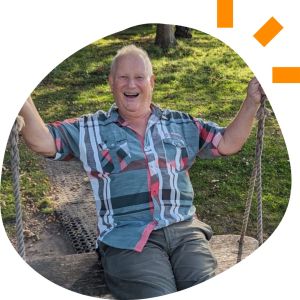 I’m very proactive at utilising what support is on offer, and that’s what led me to Penny Brohn UK. I found it online as it’s near where my sister lives. I rang them up, and they sent me all the info about what I could partake in. I thought, “Right, I don’t know if it’s going to work, but if it makes me feel better, that’s important to me.” I promptly booked onto the residential retreat that took place earlier this year in February.
There were 12 people on the retreat, including myself, and it was really eye opening. What I got from the retreat was a connection with other people and a real sense of camaraderie. I felt more grounded with where I am in my life health wise. I gained a better perspective of my situation, and I left feeling reassured about my life.
One of the things we did on the last day was to share a piece of music and to say what it meant to us and why. When my twin brother died ten years ago from pancreatic cancer, this song by Rihanna called Diamonds kept playing on the radio. It would make me burst into tears. I played this track and, at one point, the lady next to me held my hand for what felt like twenty seconds. Eight of the 12 people were holding handkerchiefs afterwards. It’s good to share emotion, especially us men. We don’t take care of our emotions enough.
That place, I felt so much from it. It gave me hope. I can now say that I feel more able to consolidate and run my life in a better, calmer and more proactive way.
At the end of the retreat, all of us felt like a family. To be able to share my experience and hear others’ stories was so enriching for all of us. Since I’ve been back home, we’ve kept in touch with each other via WhatsApp. I now feel like I’m being guided and looked after.
I’ve subsequently taken up services that the charity offers like the lymphedema support group, mindfulness classes, healthy eating advice, and the Treatment Support Programme. I also had a one-to-one consultation with Dr Catherine Zollman, who was there on the retreat.
Penny Brohn UK is making a difference to people’s lives, certainly mine, and helps to put one’s situation into perspective. I’m so grateful to have found and explored what Penny Brohn UK have to offer in a such a caring way.