

Allon's story
Counselling Lead, Allon Stokes, has worked for Penny Brohn UK for the last 8 years, supporting those living with cancer through the often-delayed emotional impact it can have.
In this exclusive interview, he shares how his role has developed since he started, and how mental and emotional support can have an impact on the person as a whole.
What’s your life like outside of Penny Brohn UK?
I’m Bristolian born-and-bred, I’ve spent most of my life in Bristol and I’m very passionate about the city. I have a very busy family life with my 2 boys, 21 and 13. We try and get to the odd Bristol Bears game, but I always find they lose whenever I go so sometimes I think it’s better for everyone if I don’t!
My biggest passion outside of my work is the historic ‘Le Mans 24 hours race’, an endurance race for sportscars. I travel to Northern France with friends for a week of spectating and French food. Everybody else’s calendar runs January – December, mine runs June – June!

When and why did you decide to pursue a career in counselling?
I feel like I’ve always been one of those people that other people just naturally talk to. When I was a student at the University of York I volunteered for ‘Nightline’ a student run helpline similar to the Samaritans. I started my career working in various administration and student support roles in higher education, but I really didn’t enjoy spending my days in meetings or sat at a computer. So, I started my training to become a Counsellor in 2006.
My first counselling placement was with Cruse Bereavement Care, where I volunteered for nearly 15 years. I also worked for the NHS counselling service in South Gloucestershire for a while and those two roles provided my first connection to working with people affected by cancer.
How did you come to be at Penny Brohn UK?
I knew of Penny Brohn UK from when it was the Bristol Cancer Centre and the ethos of charity matched everything I believed and valued in my approach to counselling.
I started at Penny Brohn UK in 2016 and in those 8 years have been fortunate to have supported around 300 clients. As a practitioner I believe passionately that separating physical and mental health is unhelpful; it’s all health. Physical health can affect our mental health, and vice versa.
We can work with people at all the different stages of a cancer journey; from diagnosis through to end of life. However, most of the people we work with are post-treatment or at least post-beginning of treatment. It’s very often that after a period of treatment has finished, the body begins to recover from what they’ve just gone through, but the emotional toll starts to take place. It almost triggers a “What happened there?” feeling, and so we try to help them to work through and find that new normal. Whatever their diagnosis.
What does a typical day as a Counsellor look like?
On a standard ‘counselling day’ we would see 5 clients in a day for 1:1 appointments, and they would likely mainly be over the phone but with some face-to-face at our National Centre or counselling space at The Hub (the Penny Brohn UK shop). ‘These sessions are 50 minutes long and we can see a range of people, from those living with cancer, those with a long-term or terminal diagnosis to those that support them – their family and friends.
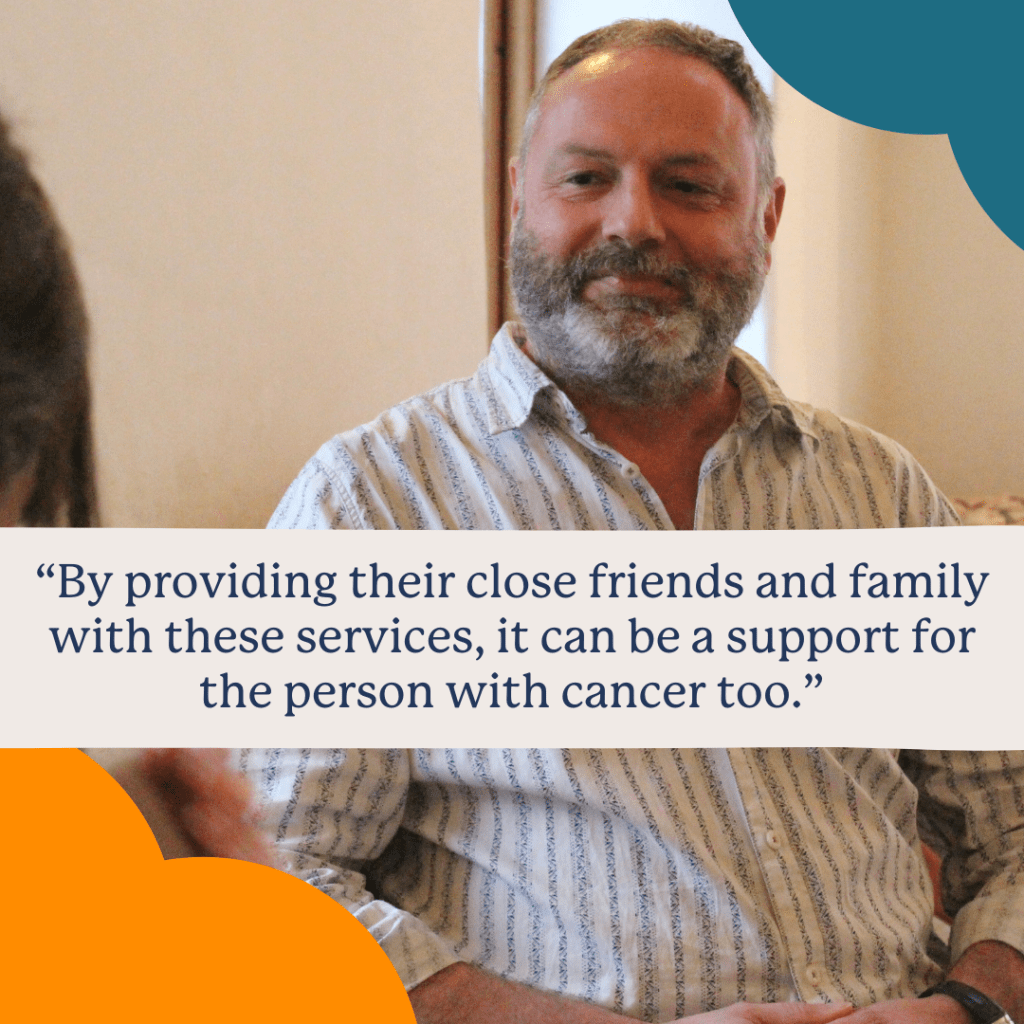
Our approach at Penny Brohn UK is that close family and friends are equally affected by a cancer diagnosis. Often, when people are going through treatment, their emotions are put to one side because their time is focused on treatment, going to hospital appointments and the impacts their treatment may be having. That can be the hardest time for family and friends. They’re seeing their loved ones go through horrible treatment, seeing the physical, mental and emotional effects of that – but may also be juggling other priorities – jobs, looking after children and even find themselves taking on a caring role for a loved one. This can change the nature of a relationship dramatically, with having to help their loved one to bathe, take medications, dress etc.
By providing their close friends and family with these services, it can be a support for the person with cancer too. It can take away some of the worry they may be feeling for their friends and family. Leaving them to focus on what’s truly important; their treatment.
We have also recently launched our new Connect Group, a fortnightly online peer-support group that anybody with cancer can attend; whether they’re newly diagnosed, currently going through treatment, living with the affects of cancer after treatment or have received an advanced stage diagnosis. Our Counselling team help to facilitate these sessions and are always on hand to keep an eye on things and provide any further support if it’s needed. But these sessions are self-led by those who attend, giving them a safe space to discuss their personal experiences.
What do you find the most rewarding about working at Penny Brohn UK?
“The word that comes up a lot amongst the team is that we all feel it’s such a real privilege to work with our clients and to be part of what we’re trying to do at Penny Brohn UK.”
I personally think of counselling as helping someone to find their best way forward, to live as well as they can with the impact of cancer. I believe that is relevant to anyone with a cancer diagnosis, from those with a positive prognosis, to someone who’s been given a terminal diagnosis – you can still support them to make positive changes, whatever their prognosis is. Sometimes for people who are feeling really stuck, we can help them find a way of reframing what they’re feeling.
As surprising as it might sound, some of the most rewarding and enjoyable work I’ve been involved with is those coming to the end of their lives. You can’t in any way change the outcome, but you can be part of helping that person to feel a bit more comfortable, a bit more in control. Certain clients will always stay with you. There are often things that on paper might seem relatively minor, that can be a real blockage to them, causing them all kinds of stress. They’re trying to protect others in their circle, or trying to be sensitive to others, while in turn neglecting themselves.
For people with a longer-term prognosis, the message they get from others is ‘you’re better now aren’t you?’, but the emotional impact is far greater than people can imagine. They’ve come face-to-face with their own mortality. For a lot of people, they might be physically better, but the emotional impact is just starting to hit. They may also be on some form of background treatment for a number of years after – could be up to 5-10 years down the line – so they’re still feeling the very real impact of cancer after everyone thinks they’re ‘over’ the cancer. The fear of reoccurrence is very real and normal, and can have a huge impact on people. Finding a lump is how a lot of people envision cancer is diagnosed, but for many people there are no symptoms or what may have felt like unrelated symptoms (back pain, bruising, bowel problems etc.). This can make a lot of people feel let down by their own body, and leave people feeling differently about themselves and their bodies afterwards.
What do you find to be the most challenging part of your job?
Within the Counselling team we are a team of 3, but that means that we always have a waiting list. There’s always a huge demand for our services, and we never want to keep people waiting. I triage our clients to try to help those who need it most first, but it is normally 2-3 months before someone is able to talk to one of our counsellors. It would be amazing to have more resources, so those waiting times could be reduced and people could talk to someone more quickly.
Also, because of the constraints of the service, sometimes 6 sessions don’t feel enough. It would be wonderful in the future to be able to offer longer-term services. People very often in counselling start of with a ‘presenting’ issue (they’ve had a diagnosis, been told of a reoccurrence) but then there’s longer term deeper issues that come up (from their childhood, relationship issues, how they feel about themselves) as a result of the trauma of the cancer diagnosis. I’d like to be able to offer such clients more sessions to talk about such things, but whilst our resources are so limited, we have to sign-post them to other services, even though these issues are related to their cancer.
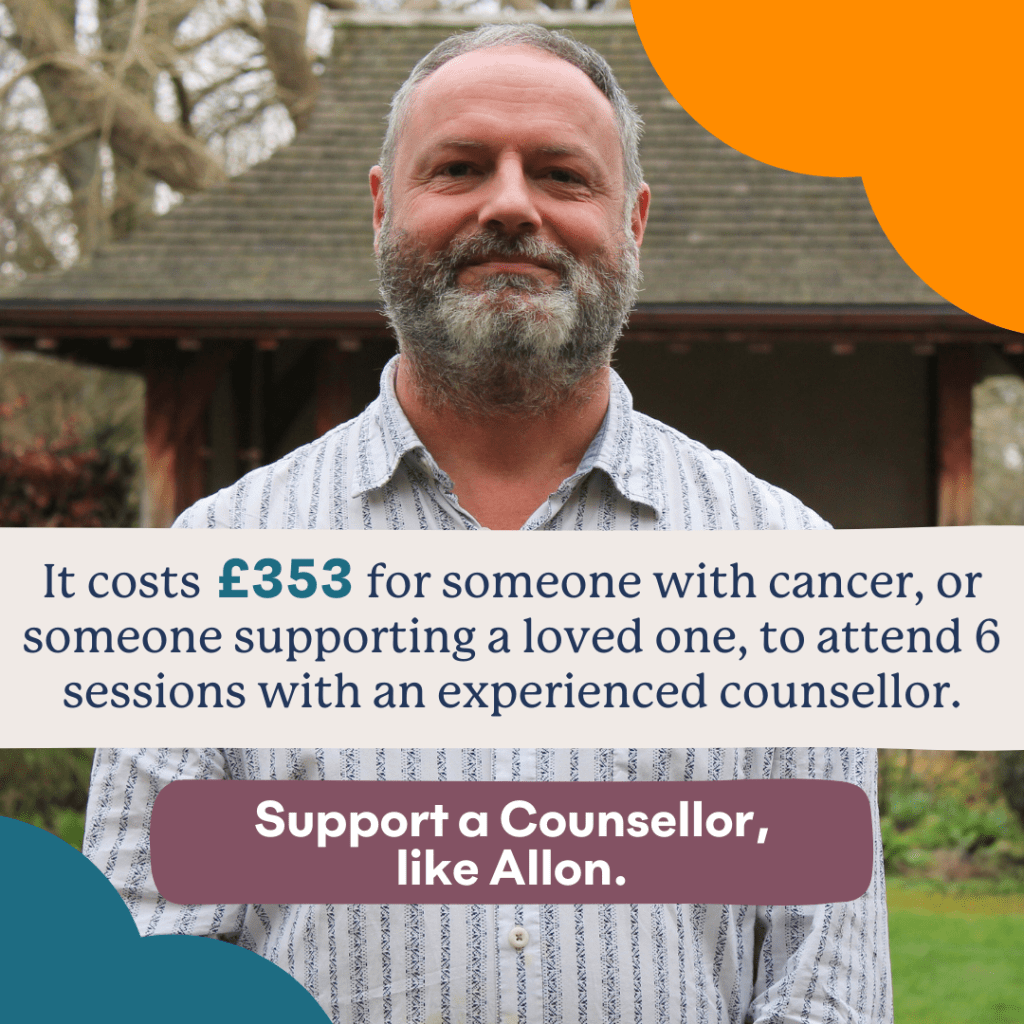
All of this would only be possible by bringing on more counsellors, which of course costs the charity money. But we are very excited to have already brought 2 new Counsellors to the team quite recently, and we only see the team getting bigger and developing the service further so that anyone living with cancer right across the country can access Penny Brohn UK the moment they need us.
We’d like to thank Allon for sharing their experience. The words used are preferred by Allon. Penny Brohn UK encourages everyone to use their own words to tell their story. If you have any questions about any of the language used, please email comms@pennybrohn.org.uk.