


I was offered surgery the next week, but I wanted a bit more time to think about it. A friend had recommended treatment called transurethral hypothermia, which I ended up having in Germany. It seemed to shrink the tumour by about 20%. However, two years later my PSA started rising again and I was recommended radiation therapy and hormone treatment.
Since then, my PSA has been monitored regularly. It’s been stable and it hopefully will continue to stay that way!
Coming to terms with my cancer
People really respond differently to being diagnosed. My response was to try and understand it, and so I started writing a blog – mainly for myself to document what I was researching. I told everyone I’d got cancer first off because I didn’t want it to slip out or to have to try to hide it.
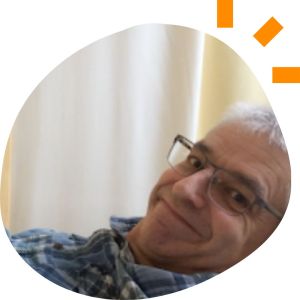 It was a huge shock for my family. You get all these different reactions. I even had one friend bursting into tears. I was thinking, ‘Oh, it’s actually me who’s got cancer, not you,’ but everyone’s different in how they process things. I was fortunate with my work situation, as the charity that employed me was really supportive. They gave me time off for treatment and to consider my options.
I’m very lucky in having a supportive partner too, and we could both share and talk about our experiences and that made a big difference. Knowing I had support made me feel stronger and more able to manage. I had a couple of friends who drove me to radiotherapy too, and all those sorts of things were helpful.
Making lifestyle changes
Probably from the first week, I explored what other options were out there to help me. I did ask my oncologist what I should do around diet and exercise, and he said, ‘You’re quite fit, just keep doing what you’re doing.’ He didn’t know what I was doing, so I thought that’s not quite right.
I found two books that really made a big difference to me. One was ‘The Cancer Whisperer’ by Sophie Sabbage. The other was by Dr Kelly Turner who looked at ‘radical remissions’ where people have ‘suddenly’ got better from cancer. Nobody else has been investigating them.
She found ten themes that were common to people who got better. Interestingly, only three of those were physical: exercise, diet and supplements. All the others were the emotional and psychological side.
I found it quite easy initially to change my diet or to introduce more exercise. But actually, it’s much harder to look at how you reduce stress in your life. The books were useful in prompting me to identify some of the things that I needed to be thinking about.
Penny Brohn UK
That was also around the time I found Penny Brohn UK and went to a weekend residential retreat. The staff were really good at just sort of rooting me in those basic things around exercise, diet, and all of that. What was lovely was being able to meet other people living with cancer and talking to them. That really was one of the most significant weekends that I had early on in my diagnosis.
I also had a consultation with an integrative medicine doctor, and it was very reassuring to have confirmation of the changes I’d made around nutrition, exercise and my lifestyle.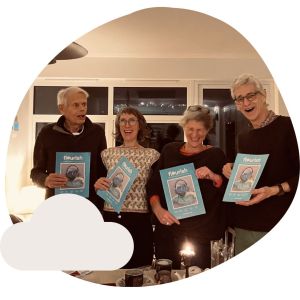
Helping others affected by cancer
I have felt strongly since my diagnosis that we need to be doing more to improve outcomes and give people diagnosed with cancer better information about options. This led me to joining the Gloucestershire Patient Cancer Reference Group where a group of patients are working with NHS staff to improve services. One improvement we’ve been seeking is an increase of the Macmillan Next Steps programme, which is for people who have had cancer treatment. It’s a six-week programme to help people get active and make exercise a regular habit. There is lots of research to show most people will have better outcomes if they are active.
Another area of interest I’ve been really pushing is prehab and there is now a new programme being set up to tackle this. Again, the evidence is strong. It shows that even if you start doing exercise and improving your diet two weeks before radiation or chemo, you’ll get better outcomes.
Peer support
I’ve also been heavily involved in setting up peer support groups in Stroud and online too, which are based around the integrative approach i.e. getting the best from conventional, lifestyle and complimentary therapies. Not everybody wants to be a part of a support group, but we’ve had people join us and then say, ‘I thought it’d all be doom and gloom and everyone sitting around moaning, but I’ve had more laughter here than I’ve had anywhere else.’
The men that have come have all stayed, which I found really interesting. Maybe they’re just those men who feel that they can share a bit more than most. But we’ve had a couple of men who found it enormously difficult to share anything around emotions and one of them has said, ‘Do you know, I haven’t shared any of this with anybody.’
There’s a lot of openness from some of the people in the group and on occasions we’ve got into more taboo topics like incontinence or erections or all of those other things that just don’t get talked about very much. Many people haven’t had a chance to discuss those things, or they’ve not been mentioned to them previously. Creating that open space can help men who are a bit more reticent open up and talk about what they’re going through. However, such talk is not compulsory! People share what they feel comfortable to share.